
Facelift Surgery Step By Step
Facelift Surgery Step By Step is not only about what happens in the operating room. It is a complete journey that starts with diagnosis and planning, continues with a carefully executed surgical method, and ends with structured aftercare. Patients often feel overwhelmed by mixed information online, especially when they search for facelift surgery steps photos or a facelift operation video step by step. The safest way to understand the procedure is to follow a clear, medically grounded explanation of each phase, from consultation to recovery.
This guide explains the facelift surgery process explained in a patient-friendly way while still giving the technical clarity that helps you compare clinics. If you are considering treatment abroad, you will also find practical planning tips for Turkey, where the quality of surgical teams, hospital standards, and follow-up systems can strongly influence your comfort and safety.
Facelift Surgery Step By Step should always be individualized. Age, skin quality, facial anatomy, medical history, and your goals determine the best technique and the safest plan. A responsible clinic will never push a one-size approach. Instead, it will map out the facelift consultation to recovery steps so you know exactly what to expect and when.
Below, you will learn how is a facelift performed, what happens before surgery, how incisions are planned, how deeper tissues are repositioned, and which milestones matter most in healing. The purpose is simple: to help you make confident decisions based on structure, not marketing.
Table of Contents
100-word overview: Facelift Surgery Step By Step describes the full pathway from consultation to recovery, focusing on safety, technique selection, and realistic expectations. A facelift can address lower-face laxity, jowls, and neck contour by repositioning deeper support layers rather than only tightening skin. The process includes medical evaluation, surgical planning, anesthesia, precise incisions, tissue lifting, closure, and follow-up care. Recovery progresses week by week, with swelling and bruising improving gradually. Choosing an experienced surgeon, a high-standard clinic, and a structured aftercare plan is essential for both aesthetic quality and patient safety.
Facelift Consultation and Pre-Op Planning: What Happens Before Surgery
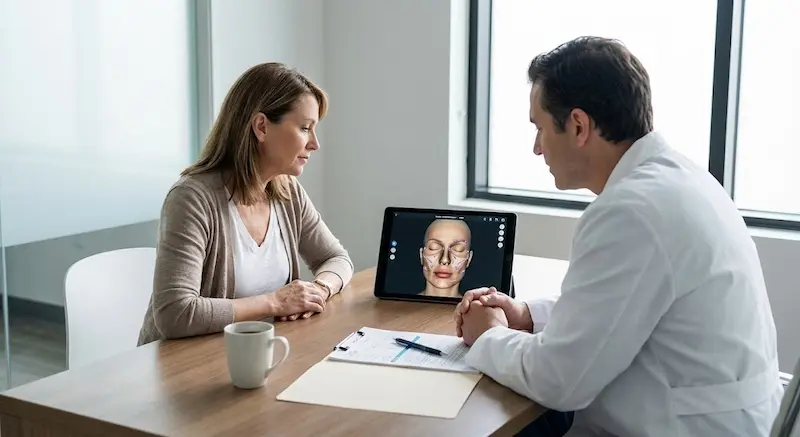
The first stage of Facelift Surgery Step By Step is a detailed consultation. This is where your surgeon evaluates facial proportions, skin elasticity, and the areas that truly drive the aged appearance. Many patients believe the problem is only “loose skin,” but the deeper support structures often matter more. A good consultation explains what can be improved, what should not be overcorrected, and how to keep your result natural.
This pre-op phase is also where you build your facelift surgery preparation checklist. It usually includes blood tests, a review of medications and supplements, and a clear anesthesia assessment. Your surgeon will ask about smoking, alcohol use, previous surgeries, and medical conditions such as blood pressure problems. These details affect bruising risk and healing quality.
Photo analysis is often part of the planning, and some clinics provide visual simulations. When patients ask for facelift surgery steps photos, they are usually trying to understand incision design and healing. A responsible clinic uses photos for education, not for unrealistic promises. During this stage, you should also ask for an facelift incision placement guide that shows where incisions will sit and how they are designed to be discreet.
Pre-op planning also includes defining the scope of your lift. Some patients need lower facelift procedure steps to target jowls and jawline only, while others need a more comprehensive plan. Your surgeon should clarify whether you are a candidate for full facelift surgery steps, or whether a limited lift can meet your goals safely.
If you are traveling to Turkey, plan logistics early. Choose clinics that coordinate airport transfers, hotel support, and follow-up appointments. A reliable team will provide written instructions and emergency contact options. Patient safety is the priority, and clinic culture matters. Facilities with multidisciplinary standards, including teams accustomed to complex surgical pathways such as oncological procedures specialists in turkey, often reflect disciplined protocols, thorough monitoring, and strong escalation pathways.
Facelift Surgery Step by Step: Anesthesia, Incisions, and Tissue Repositioning
Patients often search what happens during facelift surgery because they want a clear, visual sequence. While each surgeon has preferences, the core facelift surgery procedure steps follow a consistent structure. Your operation begins with preparation, sterile marking, and anesthesia. The aim is controlled, precise work with minimal trauma to tissues.
The anesthesia phase includes facelift surgery anesthesia steps such as safety monitoring, airway control if needed, and steady blood pressure management. In many cases, general anesthesia is used, though some limited procedures may use deep sedation based on medical suitability. A reputable clinic will prioritize airway safety and continuous monitoring.
Next comes incision planning and execution. Your surgeon follows an facelift incision placement guide that typically places incisions around the ear contours and sometimes into the hairline. The purpose is to hide scars while allowing access to deeper layers. Incisions must be designed for your hairline, skin thickness, and the degree of lift needed.
After incisions, the surgeon works on tissue repositioning. This is the stage that explains how is a facelift performed beyond simple skin tightening. A modern facelift aims to lift and stabilize deeper support layers, then redrape skin without tension. This reduces the “pulled” look and improves long-term stability.
For patients researching deep-plane lifting, deep plane facelift step by step generally includes controlled release and repositioning of deeper facial structures. In technical terms, surgeons may describe deep plane facelift surgical steps and deep plane facelift dissection steps as the method used to reach and mobilize the deeper plane safely. The goal is a natural contour shift, not aggressive skin traction.
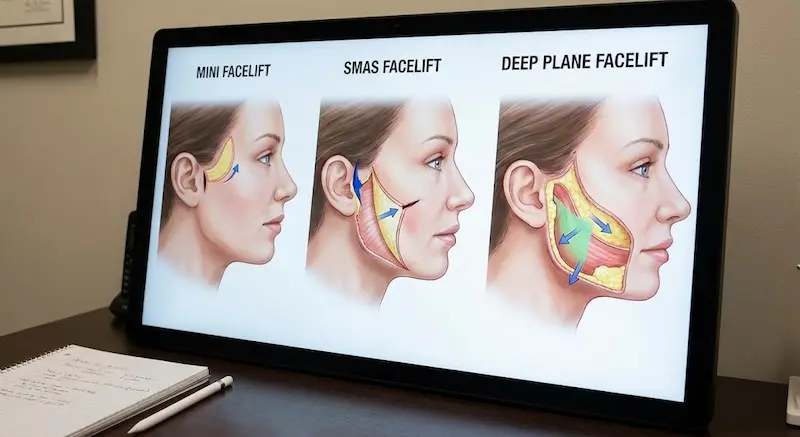
For SMAS-based techniques, your surgeon may outline smas facelift technique steps where the SMAS layer is tightened or repositioned in a structured way. For smaller corrections, surgeons may discuss mini facelift procedure steps, which focus on limited areas with shorter scars and a narrower lift zone.
Finally, closure is done carefully. Drains may be used depending on surgeon preference and your bleeding risk. Dressings are placed to support early healing. At this point, Facelift Surgery Step By Step transitions from surgery into a recovery plan that protects results and reduces complications.
SMAS vs Deep Plane vs Mini Facelift: Technique Differences Explained
In Facelift Surgery Step By Step, technique choice is not a branding decision. It is an anatomical decision based on where your laxity is coming from and how much correction is needed. Patients often compare options online, but many articles oversimplify the differences. A trustworthy surgeon explains the pros and limits of each approach and matches the technique to your facial structure, not to a trend.
SMAS facelift techniques focus on repositioning the SMAS layer, a supportive tissue beneath the skin. Surgeons may describe smas facelift technique steps as lifting, tightening, or reshaping this layer to improve the jawline and midface support. When done well, skin is redraped with low tension, helping scars heal discreetly and supporting a natural look.
Deep plane facelift methods work in a different tissue plane. Patients searching deep plane facelift step by step often want to know why results can look softer in the midface. The deep plane facelift surgical steps typically involve deeper release and repositioning to address cheek descent and deeper folds. Surgeons may also mention deep plane facelift dissection steps to describe how the tissue plane is safely accessed and mobilized. The key is controlled technique and surgeon expertise, not aggressiveness.
Mini facelift approaches are smaller and targeted. People looking up mini facelift procedure steps usually want improvement in early jowling or mild laxity. A mini lift can offer a shorter recovery and smaller incision pattern, but it cannot replace a full correction if the neck and midface need more structural support.
Technique selection also depends on whether you need a limited lift or a full approach. In many plans, surgeons outline lower facelift procedure steps to treat jowls and jawline definition, while more comprehensive cases follow full facelift surgery steps that address broader facial zones. The best consultation clarifies which areas are being treated and why, as part of the facelift surgery process explained.
If you are considering surgery in Turkey, ask the clinic to explain their technique selection criteria clearly and provide written guidance. High-standard centers often operate within hospital systems that prioritize strict safety protocols. A strong institutional culture, including teams familiar with complex pathways such as oncological procedures specialists in turkey, can reflect disciplined monitoring and escalation systems that benefit elective aesthetic patients as well.
Facelift Procedure Time and What to Expect on Surgery Day (Clinic Checklist)
Patients want to know what happens during facelift surgery in real life, not only in theory. Surgery day is a sequence of check-ins, safety steps, and controlled surgical work. The timeline varies depending on complexity, combined procedures, and technique. This is why searching for a single number can be misleading. Instead, understand the flow and the safety checks that protect you.
Most clinics begin with identification checks, consent review, and final surgical markings. Your surgeon confirms the plan and answers last-minute questions. This is also when a nurse reviews your facelift surgery preparation checklist to confirm medication restrictions, fasting status, allergies, and medical history. A careful clinic treats this as essential, not optional.
Next, anesthesia begins. The anesthesiology team manages facelift surgery anesthesia steps including monitoring, medication delivery, airway safety if needed, and stable blood pressure control. Good blood pressure control reduces bleeding and can improve comfort during early healing. You should expect continuous monitoring throughout the procedure.
Procedure time varies, but many facelifts take several hours, especially when deeper tissue work is involved. If you are researching facelift surgery procedure steps, remember that precision matters more than speed. The operating team works carefully through incision placement, tissue repositioning, hemostasis, and closure. Clinics may offer educational materials such as facelift operation video step by step content, but your own procedure will be individualized.
Clinic checklist
ID verification, consent forms, pre-op vitals, medication review, allergy confirmation, and final surgeon markings.
Intra-op safety
Continuous monitoring, temperature control, blood pressure stability, and sterile technique.
Post-op transition
Recovery room monitoring, nausea control, pain management, and discharge instructions.
Before you leave the clinic, you should receive written instructions, emergency contact details, and a follow-up schedule. This is part of facelift consultation to recovery steps and is especially important for international patients. If you travel to Turkey, choose a clinic that provides private transfers, hotel support, and early post-op reviews before your flight. Structured care is a key factor in safer recovery.
Facelift Recovery Step by Step: Week-by-Week Healing Timeline and Milestones
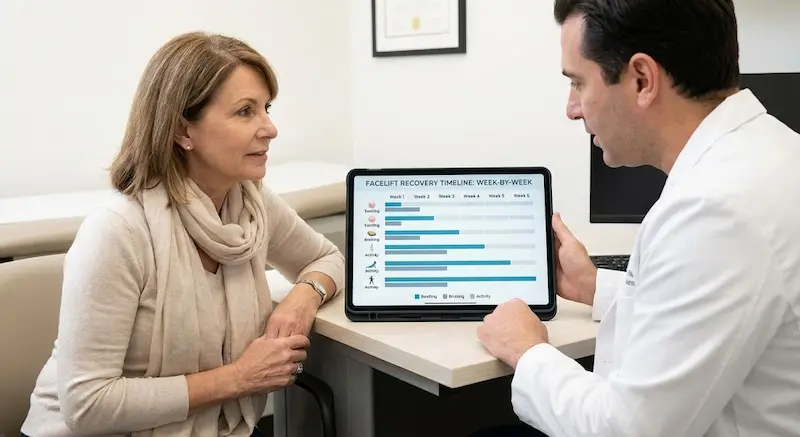
Facelift Surgery Step By Step continues long after the operating room. Recovery is a staged process where bruising, swelling, and tightness gradually improve, while deeper tissues stabilize over weeks and months. Patients often search facelift recovery timeline day by day to compare progress, but the most reliable approach is to track your own trend: discomfort should ease, swelling should soften, and bruising should fade steadily.
In the first 48 hours, rest is essential. You may feel pressure, tightness, and fatigue from anesthesia. Keep your head elevated and take short walks to support circulation. This early period is also when your clinic should be easily reachable. Clear instructions and responsive follow-up are part of safe facelift consultation to recovery steps.
Days 3–7 are often the peak swelling window. Bruising can look darker before it improves. Many patients worry about asymmetry at this stage, but uneven swelling is common. Follow incision-care instructions carefully, avoid bending and lifting, and continue sleeping on your back with elevation. This is the foundation of consistent facelift recovery steps.
Week 2 is a major milestone. Bruising often fades and swelling begins to settle. Many patients feel well enough for light social activity, but close-up photos can still show puffiness. If you are planning travel, this is why clinics in Turkey often recommend staying long enough for early checks and dressing removal before returning home.
Weeks 3–4 usually bring a more natural look. Residual swelling can still hide definition, especially along the jawline. You may notice numbness near the ears or firmness under the skin. These changes typically improve slowly. Your surgeon may begin structured scar-care guidance as incisions mature.
Weeks 6–12 are the refinement stage. Most visible swelling continues to decrease, and the face feels more “yours” again. This is also when many patients feel confident about results. However, subtle tissue settling can continue beyond this window. A responsible surgeon explains that “final” results are gradual, which is a realistic part of facelift surgery process explained.
Throughout recovery, avoid smoking and nicotine, protect incisions from sun exposure, and attend every follow-up. If you are traveling, choose a clinic that offers remote check-ins after you return home. High-standard clinics often operate within broader hospital systems where safety culture is strong. The presence of teams experienced in complex pathways, including oncological procedures specialists in turkey, can reflect disciplined monitoring and escalation practices that benefit elective cosmetic patients too.
Many patients look for facelift surgery steps photos to predict their own healing. Use visuals only as a general reference. Your body’s response is individual, and the safest benchmark is your surgeon’s clinical assessment and steady week-by-week improvement.
Facelift Risks and Safety: Complications, Scar Care, and How to Choose a Qualified Surgeon
Facelift Surgery Step By Step should always be guided by safety first. Even with excellent technique, risks exist. The best results come from a qualified surgeon, a well-equipped facility, and an aftercare system that detects issues early. Patients often ask what happens during facelift surgery, but it is equally important to understand what can go wrong and how strong clinics reduce those risks.
Possible complications include hematoma, infection, poor wound healing, delayed swelling, unfavorable scarring, and temporary nerve irritation. Most of these risks can be reduced with careful surgical planning, blood pressure control, sterile technique, and strict post-op instructions. If you notice sudden one-sided swelling, persistent bleeding, fever, worsening redness, foul drainage, chest pain, shortness of breath, or new facial weakness, contact your surgeon urgently.
Scar care is a long-term part of recovery. Ask for an facelift incision placement guide so you understand where incisions sit and how they are designed to hide in natural contours. Early scars may look pink or raised, but they typically improve as they mature. Sun protection, surgeon-approved scar products, and patience strongly influence final scar quality.
To choose a qualified surgeon, focus on training, experience, and transparency. A trustworthy clinic explains how is a facelift performed in your case, shows before-and-after results that match your anatomy, and provides a written plan. They should clearly outline facelift surgery procedure steps, expected healing milestones, and follow-up schedule. If a clinic rushes consultation or avoids detailed explanations, consider it a red flag.
- Verify credentials: Board certification, hospital privileges, and a track record in facial surgery.
- Ask about technique selection: They should explain SMAS, deep plane, and mini options clearly, including deep plane facelift surgical steps or smas facelift technique steps when relevant.
- Review safety protocols: Anesthesia monitoring, emergency readiness, and infection control standards.
- Confirm aftercare structure: Scheduled follow-ups, 24/7 contact, and clear instructions for facelift recovery steps.
If you are considering surgery in Turkey, choose clinics that operate in accredited hospitals or high-standard surgical centers with robust anesthesia support. Strong systems often include multidisciplinary collaboration. The presence of a broader safety culture, including teams experienced with complex surgical pathways such as oncological procedures specialists in turkey, can signal disciplined protocols and reliable escalation pathways. These factors help protect both your health and your final aesthetic result.
When planned and performed responsibly, Facelift Surgery Step By Step can be a safe, confidence-restoring procedure. The key is choosing expertise, following instructions without shortcuts, and allowing your body the time it needs to heal properly.
Frequently Asked Questions (FAQ):
What does Facelift Surgery Step By Step include from start to finish?
It includes consultation, medical tests, a personalized surgical plan, anesthesia, incision placement, tissue repositioning, closure, follow-ups, and structured recovery instructions.
How is a facelift performed in simple terms?
The surgeon makes discreet incisions, lifts and repositions deeper support layers, then redrapes the skin without excessive tension to create a natural-looking result.
What happens during facelift surgery on the day of the procedure?
You complete safety checks, meet the anesthesia team, receive monitoring and anesthesia, then the surgeon performs incisions, lifting, stabilization, and closure before recovery-room observation.
How long does facelift surgery usually take?
It varies by technique and whether additional procedures are combined, but many facelifts take several hours because precision and bleeding control matter more than speed.
What is the difference between SMAS, deep plane, and mini facelift techniques?
SMAS targets the supportive SMAS layer, deep plane works in a deeper tissue plane to reposition structures more comprehensively, and mini facelift is a smaller, limited correction for mild laxity.
Where are facelift incisions placed?
Incisions are commonly placed around the ear contours and may extend into the hairline, designed to follow natural creases so scars are less noticeable once healed.
Is general anesthesia always required for a facelift?
Many facelifts use general anesthesia for comfort and control, while select limited procedures may use deep sedation depending on patient health and surgeon preference.
What does the facelift recovery timeline look like week by week?
Swelling and bruising are most noticeable in the first 1–2 weeks, many patients look more presentable by weeks 2–3, and refinement continues over 6–12 weeks and beyond.
What are the most important safety factors when choosing a facelift surgeon?
Look for relevant credentials, strong experience in facial surgery, transparent planning, hospital-level safety standards, clear aftercare, and reliable follow-up access.
Can I travel to Turkey for facelift surgery, and what should I plan?
Yes, but plan for pre-op evaluation, enough time for early post-op checks, private transfers, a calm hotel, and a clinic that offers written instructions and post-travel follow-up support.
Plastic Surgery Consultation in Turkey
Join hundreds of satisfied international patients who have trusted us with their care. Fill out our simple contact form to receive a customized surgical plan from our expert medical team and begin your seamless experience in Istanbul.